
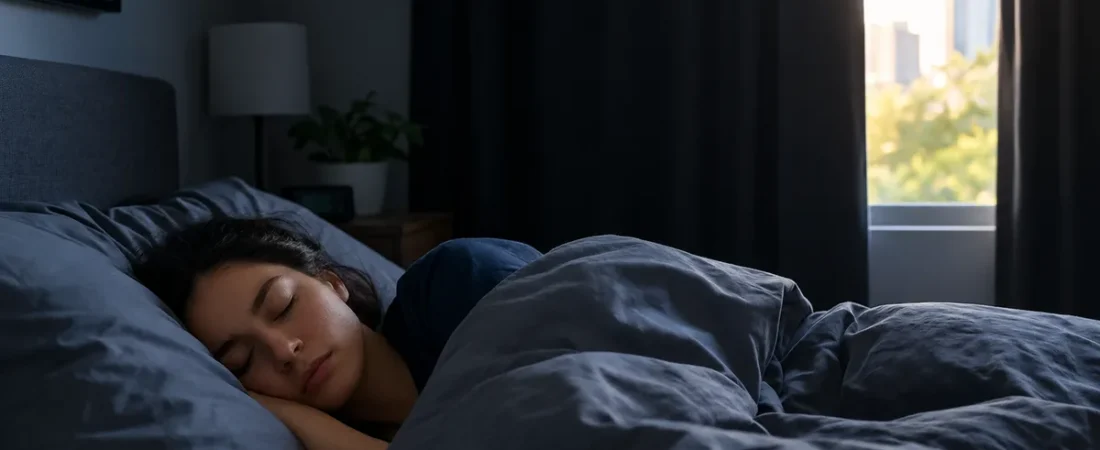
You finish your night shift exhausted, get home ready to sleep—and suddenly your body won’t cooperate.
The sun is up. The neighborhood is awake. Your room feels too bright, and every little noise seems louder when you’re trying to rest.
Many night-shift workers know this frustration: being exhausted doesn’t always mean daytime sleep comes easily.
If you’re wondering how to sleep during the day when you work nights, start with what’s actually getting in the way—light, noise, temperature, or your after-shift routine.
You don’t need a perfect setup. A few targeted changes can make your daytime sleep easier to protect.
How to Sleep During the Day When You Work Nights
Your body is trying to sleep at a time when the world is telling it to be awake. Daylight, household activity, traffic, deliveries, and everyday noise can all make daytime rest harder.
So if you come home exhausted but still struggle to sleep, don’t assume you’re simply “bad at sleeping.” Start by looking at what’s working against your rest.
According to CDC/NIOSH, night-shift workers are working against the body’s natural circadian clock, which normally supports sleeping at night and being awake during the day.
Your Wind-Down Can Start Before You Get Home
After a long shift, it’s tempting to get home, scroll for a while, eat a big meal, finish a few chores—and suddenly an hour or two has disappeared.
If you can, keep your after-shift routine simple. Take care of what you genuinely need to do, then give yourself a clear path toward bed.
If you’re working another night, protecting those daytime hours matters.
Make Your Bedroom Feel Like It’s Still Night
Morning sunlight can make a bedroom feel wide awake even when you’re exhausted.
Try making the room as dark as you comfortably can. Blackout curtains can help reduce daylight, while a sleep mask can be useful if light still sneaks around the edges.
You don’t necessarily need both. Start with the problem you actually have.
CDC/NIOSH also recommends creating a very dark, quiet, cool, and comfortable sleep environment, which can be especially helpful when you need to sleep during daylight hours.
What Can You Do About All That Daytime Noise?
This is one of the biggest frustrations shift workers deal with: everyone else is living their normal day while you’re trying to sleep.
A white-noise machine or fan may help create a more consistent background sound. Comfortable earplugs may also be useful for some people.
If you need to remain reachable for family, work, or emergencies, make sure whatever you use doesn’t prevent you from hearing alerts you genuinely need.
Don’t Forget About Temperature and Comfort
A room that feels comfortable at night may feel completely different once the afternoon sun starts warming it.
Consider whether temperature is part of what wakes you. A fan, breathable bedding, or adjusting your room temperature may make your sleep environment more comfortable.
Again, you don’t need to change everything. Fix the thing that bothers you most first.
Keep Your After-Shift Routine Simple
You don’t need a complicated 12-step bedtime routine after working all night.
Think simple:
Get home → take care of essentials → reduce stimulation → darken the room → get comfortable → rest.
The easier your routine is to repeat, the more realistic it becomes on the days when you’re completely drained.
Woke Up Earlier Than You Wanted?
You planned to sleep until 3 p.m. You check the clock—and it’s only noon.
That can be frustrating, especially when another night shift is waiting for you.
Instead of immediately worrying about the hours you’ve lost, consider how rested you feel and how much time remains before your next shift. Depending on your schedule, another sleep opportunity or a planned nap may be something to consider.
Another Night Shift Tonight? Here’s What to Think About
If you’re working again tonight, your priority is different from someone finishing their final night shift.
Focus on protecting enough rest for the upcoming shift rather than trying to switch back to a daytime routine immediately.
For more help planning the timing, read our guide What Time Should You Sleep After a 12-Hour Night Shift?
A Few Sleep Products That Might Actually Help
You don’t need a cart full of sleep gadgets.
Start with the problem:
Too bright? Blackout curtains or a sleep mask.
Too noisy? White noise or comfortable earplugs.
Too warm? A bedside fan or breathable bedding.
Cozy & Well Picks — Coming Soon
We’re researching practical daytime-sleep products for night and rotating-shift workers. Our recommendations will focus on useful features, comfort, value, and how well each product fits the specific problem it’s meant to solve.
Make Daytime Sleep Easier to Plan
Daytime sleep can look different depending on your shifts, workdays, and recovery days. The Night Shift Sleep & Recovery Planner helps you organize your sleep opportunities, track sleep and energy patterns, and plan recovery around your actual schedule.
GET THE NIGHT SHIFT SLEEP PLANNER →
The Bottom Line
Learning how to sleep during the day when you work nights isn’t about creating a perfect bedroom or following someone else’s ideal routine.
Look at what keeps waking you or stopping you from falling asleep in the first place.
Start there.
One good blackout solution, less daytime noise, a cooler room, or a simpler after-shift routine may be more useful than changing everything at once.
And on the really difficult days, remember that daytime sleep is happening while the rest of the world is awake. Protecting your rest is part of working nights—not an indulgence.