
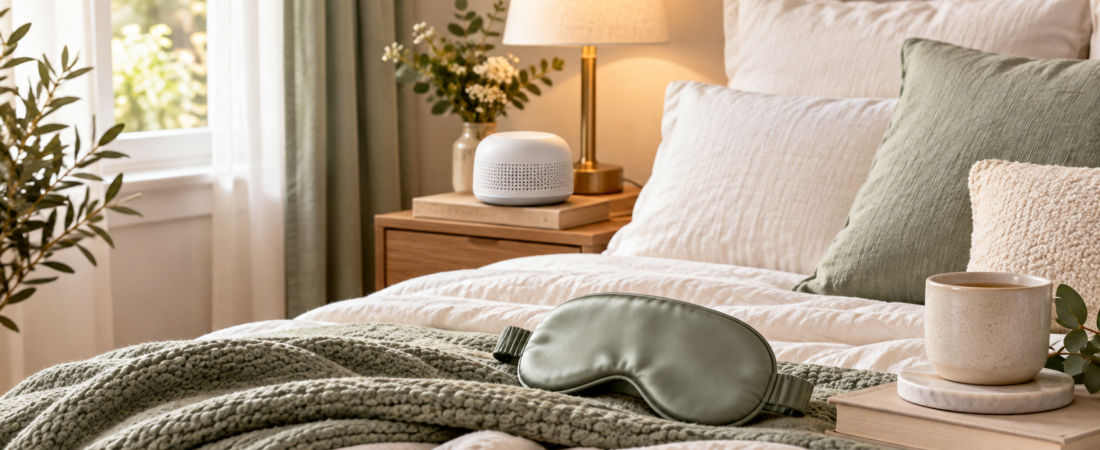
Finding the best sleep products doesn’t mean filling your bedroom with expensive gadgets. Sometimes, a darker room, more comfortable pillow, less distracting noise, or cooler bedding can make your sleep environment feel noticeably better.
With so many sleep products available, however, figuring out what’s actually worth considering can be overwhelming.
At Cozy & Well Guides, we research and compare sleep products to help you narrow down the options. This guide focuses on practical products designed to solve specific sleep-environment problems—from unwanted light and noise to overheating and uncomfortable bedding.
Affiliate Disclosure: Cozy & Well Guides may earn a commission from qualifying purchases made through links on our website, at no additional cost to you. Our recommendations are independently researched.
Our Quick Picks
- Block unwanted light: Sleep mask
- Reduce distracting sounds: White noise machine
- Improve bed comfort: Supportive pillow
- Sleep cooler: Breathable or cooling bedding
- Reduce outside light: Blackout curtains
- Make mornings gentler: Sunrise alarm clock
- Understand sleep patterns: Sleep tracker
- Listen to relaxing audio: Sleep headphones
What Actually Makes a Good Sleep Product?
A good sleep product should solve a specific problem. Before buying anything, ask what is actually making your sleep environment less comfortable—is it light, noise, heat, an uncomfortable pillow, or your morning routine?
Focus on products that address that problem directly, are comfortable to use, and fit naturally into your routine. You don’t need more sleep gadgets—you need the right solution for your needs.
8 Types of Sleep Products Worth Considering in 2026
1. Sleep Mask — Best for Blocking Unwanted Light
Best for: Light sleepers, travelers, shift workers, and anyone whose bedroom isn’t completely dark.
A sleep mask is a simple way to create a darker sleep environment when streetlights, early sunlight, or indoor lighting are difficult to eliminate. Look for a mask that blocks light effectively without putting uncomfortable pressure around your eyes.
What to look for:
- Effective light blocking
- Comfortable, adjustable fit
- Soft and breathable material
- Minimal pressure around the eyes
- Washable or easy-care construction
- A design suitable for your usual sleep position
Cozy & Well Tip: If light still enters around your blackout curtains, a comfortable sleep mask can provide an extra layer of light control.
2. White Noise Machine — Best for Reducing Distracting Sounds
Best for: Light sleepers, city dwellers, couples, and anyone dealing with inconsistent nighttime noise.
A white noise machine creates steady background sound that can help mask distractions such as traffic, neighbors, doors, or other household noise. For most people, simple controls and consistent sound are more useful than having dozens of extra features.
What to look for:
- Adjustable volume
- Multiple sound options
- Continuous-play capability
- Simple, easy-to-reach controls
- Optional timer
- Compact size if you travel frequently
- Display lights that can be dimmed or turned off
Cozy & Well Tip: Not sure if background sound works for you? Try sleeping with a fan or basic white-noise recording first before investing in a dedicated machine.
3. Supportive Pillow — Best for Improving Bed Comfort
Best for: Anyone whose current pillow feels uncomfortable, too flat, too firm, or too bulky.
There’s no single perfect pillow for everyone. The right choice depends on your sleep position, preferred firmness, body size, and comfort preferences. Instead of choosing based on popularity alone, focus on what feels wrong with your current pillow and look for an option that addresses it.
What to look for:
- A loft that suits your sleeping position
- Comfortable firmness and support
- Breathable materials if you sleep warm
- A removable, washable cover
- Materials that maintain their shape reasonably well
- A good return or trial policy when available
Cozy & Well Tip: Pillow comfort is personal. Focus on your sleeping position and preferred feel rather than assuming the most expensive pillow is automatically the best choice.
Over time, pillows can lose their resilience, so if yours has become noticeably flat or uncomfortable, it may simply be time for a replacement.
4. Breathable or Cooling Bedding — Best for Hot Sleepers
Best for: Hot sleepers and anyone who frequently feels too warm or uncomfortable in bed.
If you tend to overheat at night, lighter and more breathable bedding may help make your bed feel more comfortable. Instead of relying only on products marketed as “cooling,” pay attention to the actual materials, construction, and weight of the bedding.
What to look for:
- Breathable, lightweight materials
- Sheets and covers that feel comfortable against your skin
- Moisture-management features if you tend to perspire
- Bedding appropriate for your climate and season
- Easy-care and washable materials
- A reasonable return policy when buying premium bedding
Cozy & Well Tip: Don’t pay extra for a “cooling” label alone. Compare the materials, construction, customer feedback, and return policy to decide whether the product is worth the price.
5. Blackout Curtains — Best for Bright Bedrooms
Best for: City bedrooms, shift workers, light-sensitive sleepers, and anyone dealing with streetlights or early-morning sunlight.
Blackout curtains can create a darker bedroom when outside light is difficult to control. For effective coverage, look beyond the curtain color—the material, lining, dimensions, and installation can all affect how much light enters around the window.
What to look for:
- Effective light-blocking material or lining
- Enough width and length to cover the entire window
- Good coverage around the window edges
- Easy installation
- Machine-washable or easy-care fabric
- A style that works with your bedroom décor
Cozy & Well Tip: Choose curtains that extend beyond the sides and top of your window to help reduce light entering around the edges.
6. Sunrise Alarm Clock — Best for Gentler Mornings
Best for: Anyone who dislikes waking to a sudden alarm, especially during darker mornings.
A sunrise alarm clock gradually increases light before your scheduled wake-up time, creating a gentler transition into morning. Many models also include nature sounds, adjustable brightness, white noise, or a traditional backup alarm.
What to look for:
- Adjustable sunrise duration
- Customizable brightness levels
- Pleasant alarm or nature sounds
- Dimmable nighttime display
- Simple controls
- Backup audible alarm
- Sunset or wind-down features if you’ll use them
Cozy & Well Tip: Don’t let a sleep score become another source of stress. Use the data as one piece of information alongside how rested you actually feel.
7. Sleep Tracker — Best for Understanding Sleep Patterns
Best for: People who enjoy tracking routines, spotting patterns, and learning more about their sleep habits.
Sleep trackers can provide estimates of sleep duration, bedtime consistency, nighttime awakenings, and other trends depending on the device. They’re most useful for observing patterns over time rather than focusing too heavily on a single night’s score.
Important: Consumer sleep trackers can be useful for general wellness and observing patterns, but they shouldn’t be used to diagnose a sleep disorder. If you have ongoing concerns about your sleep, consider speaking with a healthcare professional.
What to look for:
- Comfortable design for overnight wear
- Easy-to-understand sleep reports
- Battery life that fits your routine
- Automatic sleep detection
- Useful long-term trends
- An app that is simple to navigate
- Clear information about privacy and data handling
- Features you’ll realistically use
Cozy & Well Tip: Don’t let a sleep score become another source of bedtime stress. Use tracking data as one piece of information alongside how you actually feel when you wake up.
8. Sleep Headphones — Best for Relaxing Audio at Bedtime
Best for: People who enjoy sleep stories, calming music, guided meditation, nature sounds, or other relaxing audio before bed.
Sleep headphones are designed to make bedtime listening more comfortable than bulky everyday headphones. Many use flatter speakers or soft headband-style designs, which may be especially useful if you like listening while lying down.
What to look for:
- Soft, low-profile design
- Comfortable fit for your usual sleep position
- Adjustable volume
- Adequate battery life for your routine
- Simple controls
- Washable or removable fabric when applicable
- Minimal bright indicator lights
- Wireless design if you prefer to avoid cords
Cozy & Well Tip: Comfort matters most, especially for side sleepers. Choose a low-profile design and keep the volume at a comfortable level.
Important: Avoid listening at high volumes for long periods. If outside noise is your main concern, a white noise machine may be a simpler option.
What Should You Buy First?
You don’t need all eight products. Start with the problem that affects your sleep environment the most:
Too much light? → Sleep mask or blackout curtains
Distracting noise? → White noise machine
Uncomfortable pillow? → Supportive pillow
Sleeping too warm? → Breathable or cooling bedding
Harsh mornings? → Sunrise alarm clock
Want to track patterns? → Sleep tracker
Enjoy bedtime audio? → Sleep headphones
Start with one problem and one thoughtful upgrade. You can always adjust your sleep environment as you learn what works best for you.
Our Approach to Sleep Product Recommendations
At Cozy & Well Guides, we research and compare products to help you narrow down your options. We don’t claim to have personally tested every product featured in our guides.
When evaluating products, we may consider specifications and materials, features, price and value, warranty and return policies, verified customer feedback, manufacturer information, reputable independent sources, and comparable alternatives.
If we personally use or test a product, we’ll clearly say so. If we haven’t, we won’t imply that we have.
Our goal is to give you useful research so you can make a more informed choice based on your needs, preferences, and budget.
A Better Bedroom Starts With the Basics
Sleep products can make your bedroom more comfortable, but they’re only part of the picture. A consistent routine and a bedroom that feels quiet, cool, dark, and comfortable remain important foundations for better rest.
Before buying another sleep product, ask yourself:
What is the one thing making my sleep environment less comfortable?
Start there. One thoughtful change may be more useful than filling your bedroom with products you don’t need.
Continue Your Cozy & Well Routine
Ready to make your evenings feel as good as your bedroom?
Read next: 9 Cozy Night Routine Ideas That Make You Want to Go to Bed Earlier →
Important Wellness Disclaimer
The information in this article is provided for general informational and educational purposes only and is not intended as medical advice, diagnosis, or treatment. Individual sleep needs and experiences vary. If you regularly have difficulty falling asleep, staying asleep, feeling rested, or have concerns about your sleep, consider speaking with a qualified healthcare professional.